
AI Essentials: Higher Education
Higher Education

Every student on your campus is already using AI.
The question is whether your institution is shaping how.

AI Essentials partners with community colleges, four-year institutions and continuing education divisions to build institution-wide AI readiness, with the credential architecture, faculty development, and accreditation documentation to match.

Community Colleges Four-Year Institutions Continuing Education
56%

wage premium earned by workers with AI skills compared to peers in the same roles without them. That gap doubled in a single year and is accelerating.

PwC Global AI Jobs Barometer, 2025
9x

growth in job postings requiring generative AI skills outside of IT and computer science since 2022. Healthcare, business, law, and education are all driving this surge.

Lightcast, Beyond the Buzz, 2025
80%

of the engineering workforce will need to upskill in AI through 2027. The same reskilling pressure applies across every discipline your institution serves.

Gartner, 2025
Who this is for

One program. Three institutions.

AI Essentials adapts to the structure, funding, and mission of each institution type without requiring any of them to build something from scratch.

Community college students
Community College
Workforce-aligned AI credentials that complement existing associate pathways
Community Colleges
The fastest path from enrollment to AI-ready workforce credential

Community colleges sit at the intersection of higher education and workforce development. Your students are entering the workforce faster and with more immediate economic pressure than four-year students. AI Essentials delivers sector-specific AI credentials that stack on top of existing associate degrees and CTE pathways without requiring curriculum redesign.
Sector-specific AI tracks across Healthcare, Business, Manufacturing, IT, Education, and Law
Stackable AI-Ready credentials that complement Associate of Applied Science degrees
Pre and post assessment data formatted for Perkins V and WIOA reporting
Faculty professional development in the same tracks your students complete
Rural and small campus delivery model built in from the start
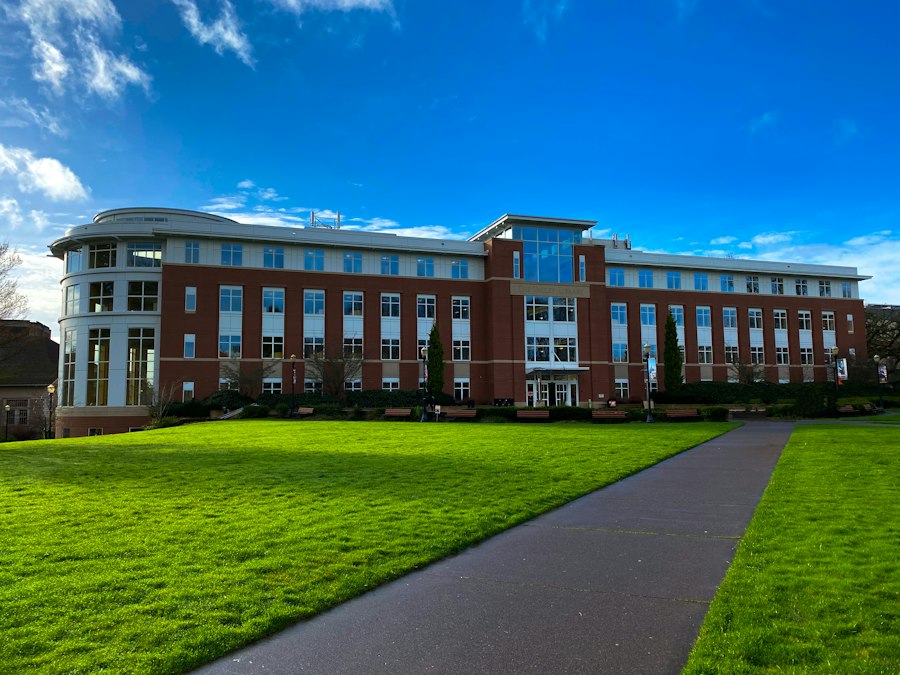
Four-year university campus
Four-Year Institution
AI credentials that live on transcripts and strengthen graduate employment outcomes
Four-Year Institutions
AI readiness that lives on the transcript and follows graduates into every career

Your graduates are entering a labor market where AI fluency is increasingly the difference between a good job offer and a great one. AI Essentials gives every student a sector-specific AI credential that complements their degree, strengthens their employment outcomes, and gives your institution measurable data for accreditation reviews and institutional effectiveness reporting.

AI credentials that articulate alongside existing majors and minors
Discipline-specific tracks tied to your most popular degree programs
Pre and post skills documentation for institutional effectiveness reporting
Faculty development program that builds AI capacity across departments
Cohort reporting that supports HLC, SACSCOC, and regional accreditation narratives
📍

Colleges of Education: Meet us at the COE Annual Conference, San Diego, September 2026. Schedule a meeting to discuss AI Essentials for pre-service teacher programs.

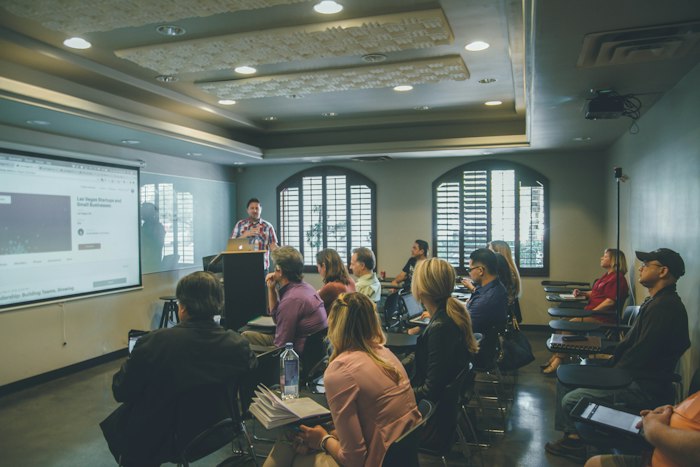
Continuing education cohort
Continuing Education
Non-credit AI credentials that move fast and meet employer demand directly
Continuing Education
The fastest-moving division on campus is the right home for AI reskilling

Continuing education and workforce development divisions can deploy AI Essentials faster than any other unit on campus: no faculty senate approval, no curriculum committee review, no waiting for the next academic year. Your division exists to respond to what the labor market needs right now. AI fluency is at the top of that list.

Non-credit AI credentials deployable within a single semester
WIOA and employer tuition assistance alignment for adult learners
Cohort model fits corporate training partnerships and employer-sponsored cohorts
Stackable toward credit-bearing programs for learners who want to continue
Revenue-generating model with institutional outcome documentation included
What the labor market is asking for

Your graduates are entering a market that rewards AI fluency above almost everything else

The data is not ambiguous. Employers across every sector are paying a significant premium for AI skills, and the gap between AI-fluent graduates and everyone else is widening faster than any institution can keep pace with through curriculum revision alone.

+28%

salary premium for jobs requiring AI skills, equivalent to nearly $18,000 more per year than the same role without AI requirements.

Lightcast analysis of 1.3 billion job postings, 2025
Generative AI skills in non-IT roles +800%
Growth in job postings requiring generative AI skills outside IT and computer science since 2022. Source: Lightcast, 2025
AI skills in healthcare job postings +40%
Increase in healthcare job postings requiring AI skills since 2020. Source: Deloitte Recruitment Efficiency Report, 2024
Overall AI job postings year over year +109%
Surge in job postings requiring AI skills from 2024 to 2025. Source: Lightcast via edX, August 2025
LinkedIn profiles adding AI skills 142x
Increase in LinkedIn members adding AI skills to their profiles. Non-technical professionals growing at 160%. Source: Microsoft and LinkedIn Work Trend Index, 2024
$18K

The average additional annual salary earned by workers with AI skills compared to workers in the same roles without them. Your graduates will compete in this market. The question is which side of that gap they land on.

Lightcast analysis of 1.3 billion job postings, 2025
How it fits

AI Essentials credentials stack on what you already offer

We don't ask institutions to replace anything. The AI-Ready sector certificate sits alongside your existing degrees, certificates, and pathways, adding market value to what your students are already earning without displacing a single credit hour or curriculum requirement.

Existing credential
Associate of Applied Science in Health Sciences
+
AI Essentials adds
AI-Ready Healthcare Professional Certificate
Existing credential
Bachelor of Business Administration
+
AI Essentials adds
AI-Ready Business Professional Certificate
Existing credential
Bachelor of Science in Education
+
AI Essentials adds
AI-Ready Educator Certificate
Existing credential
Certificate in Manufacturing Technology
+
AI Essentials adds
AI-Ready Manufacturing Certificate
Faculty and staff development

The one thing most AI training vendors never address

Faculty cannot teach AI fluency they don't have. Staff cannot implement AI workflows they've never practiced. AI Essentials is the only training program that addresses both sides of the campus simultaneously.

What most institutions are walking into

Students are arriving on campus having already used AI extensively. Faculty are behind. Administrators are making policy decisions without enough context. The institution is spending energy on AI governance conversations while the skills gap quietly widens.

⚠️ Faculty in healthcare, business, and education departments have had little or no formal AI training in their discipline
⚠️ Generic AI literacy workshops don't speak to the specific tools and workflows in each academic discipline
⚠️ There is no documentation trail showing that your faculty are AI-ready, which accreditors are beginning to notice
1
Faculty complete their discipline-specific track
A nursing faculty member completes the Healthcare track. A business professor completes the Business track. A law faculty member completes the Law track. Each one gets sector-specific training that actually applies to their classroom.
2
Faculty earn the AI-Ready sector certificate
The same credential your students earn. Faculty now have documented, verifiable AI fluency in their discipline, something they can reference in promotion and tenure files and something your institution can reference in accreditation documentation.
3
Faculty receive a pedagogical integration framework
A practical guide for bringing AI tools into their existing courses without disrupting core pedagogy. Covers academic integrity, responsible AI use, and how to assess AI-assisted student work.
Accreditation alignment

Accreditors are watching AI. Your documentation needs to be ready.

Regional accreditors are increasingly evaluating how institutions handle AI in their educational quality frameworks. SACSCOC issued formal guidance on AI in December 2024 and followed with Good Practices documentation in June 2025. HLC's revised Federal Compliance Requirements tighten expectations around institutional effectiveness, effective September 2026. Every AI Essentials deployment produces the documentation trail these frameworks are beginning to require.

Active accreditor movement: 2024 to 2026

SACSCOC issued AI guidance in December 2024. Programmatic accreditors including ABHES, ACCSC, and COE have all incorporated technology governance questions into their evaluation criteria. HLC tightens institutional effectiveness requirements in September 2026. Building AI documentation now positions your institution ahead of wherever the standards land.

HLC
Higher Learning Commission

Covers institutions in 19 states. Revised Federal Compliance Requirements effective September 2026 tighten expectations around how technology resources support educational quality and institutional effectiveness.

AI Essentials cohort data supports Criterion 4: Teaching and Learning Quality and Improvement
Faculty AI certificates document Assumed Practices around technology in instruction
Pre and post assessment delta supports continuous improvement evidence
SACSCOC
Southern Association of Colleges and Schools

Covers institutions in 11 southern states. December 2024 AI guidance and June 2025 Good Practices documentation signal that AI governance is moving into formal evaluation frameworks.

Cohort impact reports support Standard 8.2 on student learning outcomes assessment
Faculty development documentation supports Standard 6 on faculty qualifications and credentials
Institution-wide AI deployment supports Quality Enhancement Plan narratives
WSCUC
WASC Senior College and University Commission

Covers institutions in California, Hawaii, and the Pacific. Standards for educational effectiveness and institutional capacity provide natural frameworks for documenting AI readiness as a quality indicator.

Pre and post assessment data supports Standard 2.6 on student learning outcomes
Credential attainment documentation supports Standard 4 on creating an organization committed to learning
Faculty AI development supports capacity and educational effectiveness standards
Deployment model

Designed to fit inside a single academic semester

Most institutions start with a single department or pathway as a pilot. Here is what a full semester deployment looks like from first conversation to final report.

Weeks 1 to 2
Setup and alignment
Select tracks based on your priority programs
Configure cohort size and delivery format
Brief faculty leads and department contacts
Establish reporting parameters for your accreditor
Weeks 3 to 4
Pre-assessment baseline
All students and participating faculty complete sector-specific AI readiness baseline
Institution receives initial cohort baseline report
Identifies highest-need learners for additional support
Weeks 5 to 14
Active learning cohort
12 hours of scenario-based sector training
Delivered in-person, hybrid, or fully online
Faculty complete parallel professional development track
Real-time completion tracking via cohort dashboard
Weeks 15 to 16
Credential and reporting
Post-assessment completed by all learners
AI-Ready sector certificates issued
Cohort impact report delivered to institution
Accreditation-ready documentation package prepared
What students receive
A verifiable AI-Ready sector certificate, documented skills gain, and a competitive credential that complements their degree
What faculty receive
AI-Ready educator certificate, pedagogical integration framework, and verifiable professional development documentation
What the institution receives
Cohort impact report with pre and post data, credential attainment rates, and accreditation-ready documentation
Funding alignment

The funding is there. Here is where to find it.

Every institution type has access to funding mechanisms that can support AI Essentials deployment. In most cases, existing grant structures already cover this type of workforce-aligned, credential-producing training.

Institution type
Community Colleges
Perkins V
Career and Technical Education funding explicitly supports sector-aligned credentials. AI Essentials outcome documentation maps directly to Perkins V performance indicators.
WIOA Title I and Title II
Workforce development and adult education funding. DOL August 2025 guidance explicitly authorizes AI literacy training under WIOA.
State Workforce Innovation Funds
Most states maintain discretionary workforce innovation funding that can be directed toward rapid-deployment AI training programs.
Institution type
Four-Year Institutions
Title IV and Institutional Aid
Stackable AI credentials that complement degree programs can be supported through existing financial aid structures when delivered as credit-bearing electives.
FIPSE AI in Education Grants
The Department of Education allocated $50M for AI in postsecondary education under 2025 FIPSE competition, with institutions as eligible recipients.
Lumina, Gates, and Mellon Foundation Grants
Ten major foundations launched a $500M five-year initiative in 2025 specifically targeting AI access and workforce preparation in higher education.
Institution type
Continuing Education
WIOA Incumbent Worker Training
Continuing education divisions serving working adults can access incumbent worker training funds for employer-sponsored AI upskilling cohorts.
Employer Tuition Assistance
Corporate partners increasingly cover AI training costs for employees. Non-credit credential format makes employer reimbursement straightforward.
Professional Development Budgets
Many CE divisions operate on a revenue-generating model. AI Essentials credentials command strong enrollment demand given labor market signals.
From the people it reaches

What changes when an institution deploys

Student in higher education
"

I graduated with my nursing degree and an AI documentation certificate. When I interviewed, the hiring manager said it was the first time she had seen that combination. I started two weeks later.
Nursing graduate, Healthcare track
Community college, AI Essentials cohort
Faculty member
"

I had been using AI myself but had no framework for bringing it into my classroom responsibly. The faculty track gave me both the tools and the confidence. Now my students are doing things with AI that I couldn't have taught them a year ago.

Business faculty member, Business track
Four-year institution, faculty cohort
Start the conversation

Bring AI Essentials to your institution

Tell us about your institution and we will follow up within two business days with a deployment recommendation tailored to your programs, your student population, and your reporting requirements.

VP of Workforce Development and Continuing Education
Deans and Department Chairs
Provosts and Chief Academic Officers
CTE Directors and Pathway Coordinators
Institutional Effectiveness and Accreditation Staff
Faculty seeking AI professional development
Ready to talk?

Connect with our team to discuss a deployment plan tailored to your institution, programs, and reporting requirements.

Learn More

We respond to all inquiries within 24 Hours.